
Every small business owner eventually realizes that filing business taxes isn’t as simple as filing a personal income tax return. The forms you need depend on your business structure, how you earn business income, and whether you hire employees or independent contractors.
The good news? Once you understand which tax forms apply to you, tax season becomes much more manageable. Think of this as your straightforward filing checklist—a guide to the essential tax forms you’ll likely need when preparing your annual income tax return.
What Tax Forms Are Needed to File Taxes?

If you’re a sole proprietor, a partner in a business entity, or the owner of an S corporation, you’ll need to file a personal income tax return and attach specific schedules that report your taxable business income. For some business structures, you may also need to file a separate corporate tax return.
Here’s the big picture:
- Individuals and sole proprietorships: File Form 1040 with attached schedules.
- Partnerships and multi-member LLCs: File Form 1065, with each partner receiving a Schedule K-1.
- S corporations: File Form 1120-S, and distribute K-1s to shareholders.
- C corporations: File Form 1120, a separate corporation income tax return.
All these forms can be found on the IRS website.
Many small business owners underestimate how many small business tax forms apply to them in a given tax year. That’s why it pays to know the essentials—and better yet, work with a tax strategist to keep everything in order.
Important Forms for Sole Proprietors
A sole proprietorship is the simplest business structure. It doesn’t require a separate corporate tax return, but it does require a handful of small business tax forms.
Form 1040
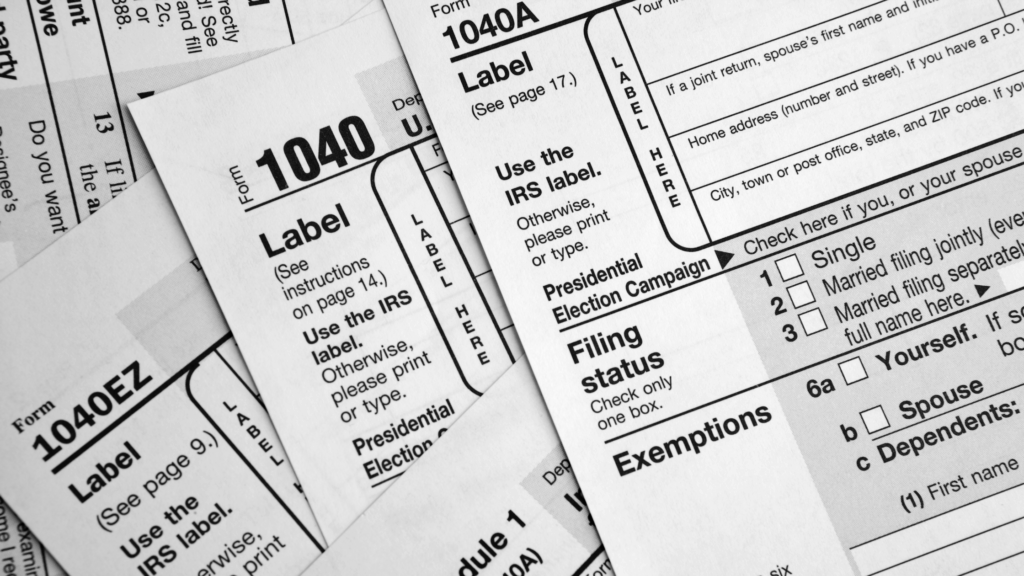
Every sole proprietor must file an individual income tax return using Form 1040. This is where you report both your personal and business income. Since there’s no legal distinction between you and your business, everything flows through one tax filing.
Schedule C
This is one of the most essential tax forms for sole proprietors. Schedule C is used to report income and deduct expenses from your trade or business. You’ll list:
- Gross receipts (all business income received)
- Cost of goods sold (if applicable)
- Business expenses like supplies, advertising, and mileage
- Net profit or loss (your taxable business income)
Schedule C feeds directly into your Form 1040, so accuracy matters. If your numbers are wrong here, it affects your entire income tax return.
Schedule SE
Because you’re self-employed, you’re responsible for paying self-employment tax, which covers your Social Security and Medicare taxes. Schedule SE calculates these amounts and determines how much you owe in social security and medicare taxes.
Together, Form 1040, Schedule C, and Schedule SE give the IRS a complete picture of your annual income tax return as a sole proprietor.
Other Business Structures
Not all small businesses operate as sole proprietorships. If your business entity is structured differently, you’ll face different tax filing requirements.
Partnerships
Partnerships file an informational return on Form 1065. The business itself doesn’t pay federal income tax, but it must report income, deductions, and other financial details. Each partner receives a Schedule K-1 showing their share of the partnership income, which they then report on their personal income tax return form.
S Corporations
An S corporation files Form 1120-S. Like partnerships, an S corp doesn’t pay federal income tax at the entity level. Instead, income and losses “pass through” to shareholders, who report them on their individual income tax returns. Shareholders also receive a Schedule K-1.
LLCs
A limited liability company (LLC) can be taxed in several ways:
- Single-member LLCs are treated as sole proprietorships for tax purposes and file Schedule C.
- Multi-member LLCs are taxed like partnerships and file Form 1065.
- LLCs electing S corp status must file Form 1120-S.
The IRS allows flexibility, but with flexibility comes complexity. Choosing the right filing status depends on your income level, tax liability, and long-term goals.
C Corporations
A C corporation must file Form 1120, which is a separate corporation income tax return. Unlike pass-through entities, C corps pay tax at the corporate level and then again on dividends paid to shareholders. While this double taxation can be a disadvantage, C corps sometimes make sense for larger small businesses or those planning to scale significantly.
Real results. Real businesses. Real savings.
Curious what you could be missing?
Important Forms For Employees and Contractors

Many small business owners hire help at some point, whether employees or independent contractors. That’s when additional small business tax forms come into play.
Form W-2
If you have employees, you must issue them a Form W-2 by January 31 each year. This form reports wages paid, federal income tax withheld, Social Security and Medicare taxes withheld, and any other employment taxes. Employers also submit W-2 copies to the Social Security Administration.
Form 1099-NEC
If you pay independent contractors $600 or more during the tax year, you must issue a Form 1099-NEC. This reports how much they were paid, but it doesn’t include employment taxes since contractors handle their own self-employment tax and estimated tax payments.
Keeping up with W-2 and 1099 reporting is one of the most important factors in staying compliant with employment taxes.
Supporting Documents to Have Ready
Even the right tax forms won’t help if you don’t have accurate records. Every small business owner should keep the following documents organized year-round:
Income Records
- Bank statements
- Invoices issued and payments received
- Sales records (POS reports, online sales statements)
Expense Records
- Receipts for deductible expenses
- Credit card statements
- Payroll records
- Mileage logs
Financial Statements
- Profit and loss statements
- Balance sheets
- Cash flow reports
Having these records ready makes tax filing smoother and protects you in case of an audit. It also ensures you capture every possible tax deductions, reducing your overall tax liability.
Other Tax Forms and Deadlines to Watch
Beyond the major forms, you may also face other tax forms depending on your situation. For example, excise taxes apply to certain industries, and estimated tax payments must be made quarterly if you expect to owe more than $1,000. Missing these tax deadlines can result in unnecessary penalties.
That’s why small business accounting plays such an important role. With a good bookkeeping system in place, you’ll always know where your numbers stand and whether you need to file additional forms. Proactive tracking also ensures you’re ready to deduct expenses properly when completing your tax prep.
Key deadlines to keep in mind include:
- January 31: W-2s and 1099-NECs due to employees/contractors.
- March 15: Partnership and S corporation returns due.
- April 15: Individual income tax return and C corporation returns due (unless extended).
- Quarterly: Estimated tax payments for self-employed business owners.
Mark these dates early and build them into your workflow. Staying ahead of tax deadlines is one of the simplest ways to keep filing stress low.
Know What Tax Forms Your Small Business Needs to File
Filing business taxes takes a proactive plan that keeps you compliant while also minimizing how much you pay each year.
A tax strategist can help you:
- Determine which small business tax forms apply to your business entity
- Plan estimated tax payments to avoid penalties
- Review deductions to lower both business tax and personal income tax return amounts
- Ensure compliance with excise taxes, employment taxes, and other tax obligations
- Structure your business for the best long-term outcome, whether that means staying a sole proprietorship or electing S corporation status
Working with a tax professional means you’re not scrambling at tax season. Instead, you’ll have a clear picture of your income tax, self-employment tax, and overall tax liability before the year ends. That allows you to make smart decisions, like whether to accelerate business expenses, adjust payroll, or time income, to keep your annual income tax return working in your favor.
Don’t leave your tax savings up to change!
Schedule a free strategy call and discover what a proactive plan can do for your bottom line
